
Bedtime Books vs Lullabies for Better Sleep
- Edward Daniels
- 2 days ago
- 6 min read

Some nights, your child wants one more story. Other nights, they melt into your shoulder the second you start to sing. That is why bedtime books vs lullabies is not really about picking a winner. It is about knowing what helps your child feel safest, calmest, and most ready for sleep on a given night.
For many families, both have a place in a gentle bedtime routine. A book can give shape to the evening. A lullaby can soften the final few minutes before lights out. When bedtime feels bumpy, understanding the difference between the two can make the whole routine feel easier.
Bedtime books vs lullabies: what each one does best
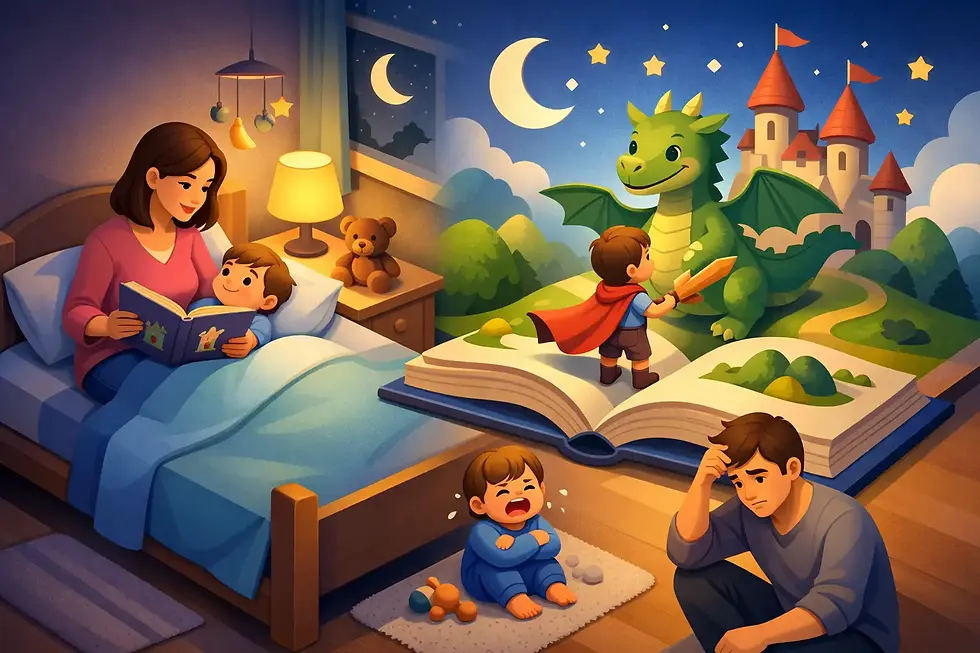
Bedtime books and lullabies both help children wind down, but they do it in different ways. A bedtime book gives your child a beginning, middle, and end. That structure matters, especially for preschoolers and young kids who feel better when they know what comes next. A familiar story signals that the busy part of the day is over.
A lullaby works more through rhythm, closeness, and repetition. It lowers the energy in the room without asking a child to follow a plot or look at pages. If your child is overtired, extra wiggly, or emotionally spent, singing can feel simpler and gentler than reading.
This is where parents sometimes get stuck. They assume one option must be better for sleep. In real life, the better choice often depends on your child’s temperament, the time of day, and how stimulating the rest of the evening has been.
When bedtime books are the better fit
Books are often the stronger choice when bedtime resistance comes from needing connection or needing a predictable routine. A calm read-aloud gives children your full attention in a way they can see and follow. They sit close, hear your voice, and settle into a shared rhythm. That kind of focused closeness can ease the usual stalling that shows up as one more drink, one more question, one more trip to the bathroom.
Books also help when a child needs a clear transition. If dinner, bath, pajamas, and brushing teeth all lead to the same story time each night, bedtime starts to feel expected rather than negotiated. Children do well with patterns. A familiar book can become part of the body’s cue that sleep is coming.
The kind of book matters, though. Not every children’s book belongs at bedtime. Bright, silly, high-energy stories can be wonderful during the day and completely wrong at 7:45 p.m. For bedtime, the best read-alouds tend to have a gentle rhythm, cozy imagery, simple page turns, and an emotionally safe tone. You want a story that settles the room down rather than wakes it back up.
That is part of why bedtime-focused stories are so helpful. A calm, cozy nighttime story gives children something pleasant to picture as they drift off. Instead of ending the day on excitement, it ends on comfort.
When lullabies work better
Lullabies often shine in the final stretch of bedtime, especially when your child is too tired to listen well. If they are rubbing their eyes, clinging, or close to tears, singing may land better than reading. A lullaby does not require much from them. They do not have to track the story or stay focused. They can simply listen, breathe, and be held.
Lullabies can also help children who get overstimulated easily. Even a very gentle book still involves pictures, page turns, and anticipation. For some children, that is soothing. For others, it keeps their mind active a little too long. Singing strips bedtime down to the basics - your voice, a steady tempo, and a feeling of safety.
There is also something deeply regulating about repetition. The same simple song, sung the same way every night, can become a powerful sleep cue. Your child hears the first line and knows exactly what happens next.
Still, lullabies have limits. They are wonderful for calming, but they do not always provide the same sense of routine and closure that a book can. If your child tends to resist bedtime by bargaining for more time, a song alone may not feel substantial enough.
The trade-off parents notice most
The biggest difference is this: books often create a fuller bedtime ritual, while lullabies often create a softer landing.
If your goal is to make bedtime feel special, connected, and consistent, books usually do more heavy lifting. They give you a repeatable routine your child can count on. If your goal is to reduce stimulation and move quickly toward sleep, lullabies may work faster.
That does not mean one is more loving or more effective. It simply means they support different parts of the bedtime process. One helps children transition. The other helps them release.
Why many families do best with both
For most parents, the sweet spot is not bedtime books vs lullabies as an either-or choice. It is using each one at the right moment.
A short bedtime book can anchor the routine. Then a lullaby can carry your child through the final few quiet minutes. This pairing works because it follows a natural sequence. First, you gather their attention. Then, you lower the energy even more.
Think of it as a ten-minute runway rather than a sudden stop. A child who has been moving, talking, asking questions, and playing all day usually needs a gradual shift into sleep. Story first, song second, lights out last can feel much smoother than expecting sleep on command.
For families building a dependable evening rhythm, this can be especially helpful. A simple routine might look like pajamas, brushing teeth, one calming book, one quiet song, and bed. Nothing fancy. Just predictable, warm, and easy to repeat.
Choosing based on your child’s personality
Some children are story kids. They love characters, page turns, and the comfort of hearing the same favorite lines every night. These children often settle beautifully with a bedtime book because the story itself helps them slow down.
Other children are more sensory and relationship-driven at night. They want your arms, your voice, and very little else. They may respond more deeply to a lullaby, especially after a hard day or a busy evening.
Age can play a role too. Younger preschoolers may need more physical closeness and simple repetition, which makes lullabies especially useful. Kids a little older may enjoy the structure and imagination of a bedtime story, as long as it stays calm and not too long.
If you are not sure which works better, pay attention to what happens after. Does your child seem more relaxed after a story, or more alert? Does singing calm them right away, or make them ask for more songs and more time? Their response will tell you a lot.
How to make bedtime books work better for sleep
If books are part of your routine, the goal is not just reading. It is reading in a way that supports sleep. Keep the lights soft. Read a shorter book instead of stretching into several. Use a calm voice, even if the story has playful moments. And try to choose books that end in a restful place.
This is where a book designed for bedtime can really help. Instead of revving kids up with adventure or jokes right before bed, it gives them a gentle path toward sleep. A story such as Where Do The Food Trucks Sleep? fits naturally into this kind of routine because it pairs imagination with a soothing nighttime feeling. For many parents, that combination is exactly what makes story time useful, not just cute.
How to make lullabies work better for sleep
With lullabies, less is usually more. You do not need a perfect singing voice. Young children are not looking for a performance. They are responding to familiarity, tone, and closeness.
Pick one or two songs and keep them consistent. Sing a little more slowly than feels natural. If your child likes motion, gentle rocking can help. If they do better with stillness, hold them quietly or sit beside the bed. The point is not to add more bedtime entertainment. It is to signal calm.
And if singing feels awkward, that is okay. Humming counts. Soft, repeated phrases count. What matters most is the steady, reassuring sound of you.
The real question is what makes bedtime easier
Parents are not usually asking about bedtime books vs lullabies because they want a theory. They want a bedtime that goes more smoothly tonight. They want fewer tears, less stalling, and a child who feels safe enough to settle down.
That is why it helps to think less about which one is best in general and more about which one helps your child most right now. If your evening needs structure, start with a bedtime book. If your child is already fading and just needs comfort, start with a lullaby. If bedtime has been hard lately, use both and keep the routine simple enough to repeat even on tired nights.
Children do not need a perfect routine. They need a gentle one they can trust. Sometimes that looks like a cozy story. Sometimes it sounds like a quiet song. Very often, it is the comfort of knowing you are there, helping the day come to a peaceful close.


Comments