
How to Choose Preschool Sleep Books
- Edward Daniels
- Jun 4
- 5 min read

Some books make bedtime feel longer. Others help the whole room exhale. The best preschool sleep books do more than fill ten minutes before lights out - they help your child shift from busy evening energy to a calmer, cozier place.
For parents of preschoolers, that difference matters. At this age, kids are imaginative, sensitive, and often still learning how to move from play to rest without a struggle. A well-chosen bedtime book can become part of that transition. It gives your child something familiar to expect, something gentle to focus on, and a quiet way to settle their body and mind before sleep.
Why preschool sleep books matter
Preschoolers live in big feelings and busy thoughts. Even after a full day, they do not always know how to slow down on their own. That is why bedtime routines work so well. They create a predictable path from the excitement of the day to the safety of sleep.
Books are often the heart of that routine because they invite connection without requiring much energy. A calm read-aloud gives your child closeness, rhythm, and repetition all at once. When the story is shaped for bedtime, it can help lower resistance instead of adding one more stimulating activity before bed.
Not every picture book fits that purpose. A funny story can be wonderful at 2 p.m. and still be the wrong choice at 7:30 p.m. If the language is loud, the pace is fast, or the plot keeps raising the stakes, your child may end the book more alert than sleepy. That does not make it a bad book. It just means bedtime calls for a different kind of reading experience.
What makes good preschool sleep books
The most helpful bedtime books usually share a few qualities. First, they have a gentle rhythm. The words feel soothing when read aloud, with sentences that flow rather than rush. Parents notice this quickly. If you find yourself naturally lowering your voice as you read, that is often a good sign.
Second, the story should feel emotionally safe. Preschoolers do not need a lot of suspense right before bed. A little curiosity is fine, but the overall feeling should be comforting. Quiet adventures, nighttime settings, loving routines, and cozy endings tend to work better than stories built around conflict or silliness that keeps escalating.
Illustrations matter too. Soft, warm artwork can support the calming effect of the story, while bright, crowded pages may keep little eyes and minds busy. Some children love lots of visual detail, but for bedtime, simpler often works better.
Length is another place where it depends on the child. Some preschoolers relax best with a very short story they can almost memorize. Others settle into sleep more easily with a slightly longer read-aloud that gives them time to unwind. In most families, the sweet spot is a book that fits comfortably inside a 5- to 10-minute routine.
How to spot books that may be too stimulating
Parents usually know the feeling right away. You finish the story, close the cover, and instead of settling down, your child pops up with fresh questions, requests, and excitement. Sometimes the issue is not the reading itself. It is the kind of energy the book creates.
Books with lots of jokes, wild sound effects, chase scenes, or cliffhanger endings can make bedtime harder. Even beloved characters can become part of a stimulating routine if the story encourages laughing, shouting, or acting things out when your goal is quiet and stillness.
This is where trade-offs come in. If your child truly loves a high-energy book, you do not necessarily have to ban it from the evening. It may simply belong earlier in the routine, with the final book reserved for something slower and softer. Many families do well with a two-book pattern - one fun favorite, then one calming bedtime story.
The best themes for bedtime reading
When choosing preschool sleep books, theme often matters just as much as writing style. Stories about nighttime routines, sleeping animals, sleepy vehicles, stars, moonlight, home, and gentle goodnights naturally support the transition to bed.
Children this age also respond well to books that reflect their own world in a reassuring way. A preschooler who resists bedtime may feel comforted by a story where everyone, even beloved characters, has a place to rest at night. That kind of story does not lecture. It quietly normalizes sleep.
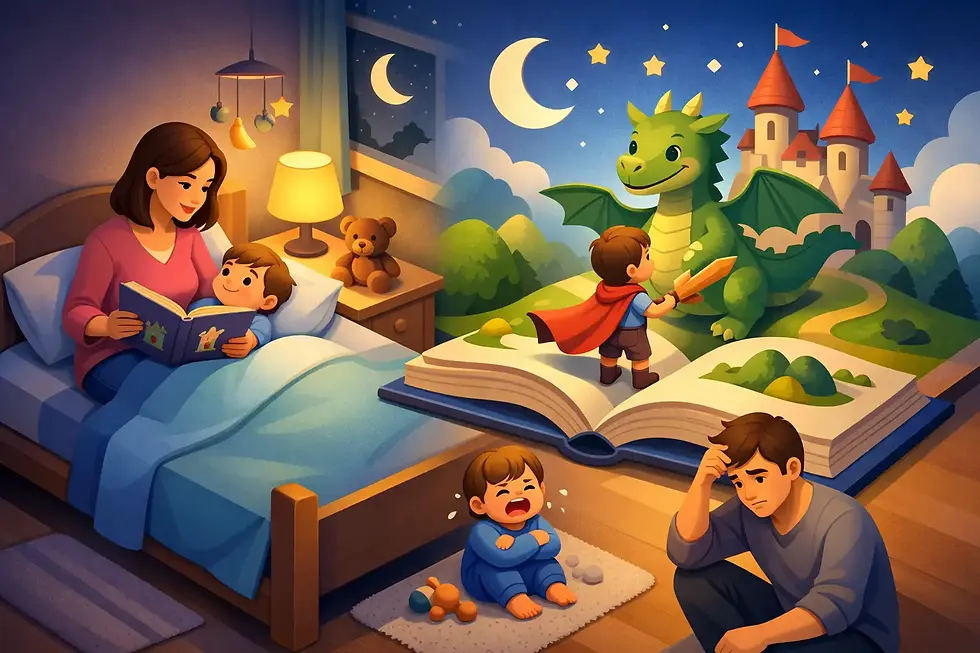
There is also something special about bedtime books with a touch of imagination. A preschooler does not want bedtime to feel like a command. They want it to feel safe, warm, and maybe even a little magical. A cozy nighttime story can offer that without becoming overstimulating. It gives children a gentle place to send their thoughts as the day winds down.
How preschool sleep books support better routines
A bedtime book works best when it is not treated like an extra task squeezed in at the end. It helps most when it becomes a clear part of the rhythm your child can count on.
That might look like bath, pajamas, brushing teeth, one drink of water, then one or two books in the same reading spot each night. Predictability is calming for preschoolers. When the story comes at the same point in the routine, your child begins to associate reading with slowing down.
The language of the book matters here, but so does the experience around it. Dimmer lights, a quieter voice, and a comfortable lap or bed can make the same story more effective. If bedtime has been stressful lately, try keeping the reading portion especially simple. One familiar book read gently can do more than a stack of exciting new ones.
Some parents worry that repetition will get boring. Preschoolers usually feel the opposite. Re-reading favorite sleep books helps them know what comes next, and that sense of knowing can be deeply comforting at bedtime. Familiar words become cues for rest.
What parents should look for before buying
If you are shopping for a bedtime title, think less about what looks trendy and more about what will actually help your child settle. Ask yourself whether the story feels calm when read aloud, whether the ending brings things to rest, and whether the book matches your child’s age and temperament.
A child who is highly sensitive may need an especially peaceful story with very little tension. A child who resists bedtime may connect better with a playful concept that still ends in a cozy, sleepy way. The goal is not to find a perfect universal book. It is to find the right kind of calm for your child.
It can also help to pay attention to parent reactions, because caregivers are part of the bedtime routine too. If a book feels pleasant and easy to read night after night, you are more likely to keep using it. That matters. The best bedtime books are not just child-approved. They are repeatable for tired parents.
One gentle example is Where Do The Food Trucks Sleep?, a calm, cozy nighttime story that follows Little Scoop through an imaginative after-hours journey. For families who want a bedtime book that feels warm, soothing, and easy to return to each night, that kind of concept can be a natural fit.
When a bedtime book is really working
You may notice small signs before you see big changes. Your child asks for the same book each night. Their body gets quieter while you read. They stop interrupting as much and begin listening with that sleepy, faraway look in their eyes.
A good bedtime book does not have to solve every sleep challenge on its own. Preschoolers still have phases, delays, and hard evenings. But the right story can make bedtime feel less like a battle and more like a landing place. That is a meaningful shift for both children and parents.
If you are choosing among preschool sleep books, trust the ones that feel gentle in your hands and gentle in your voice. The best bedtime stories do not push the night along. They soften it, one page at a time.


Comments